
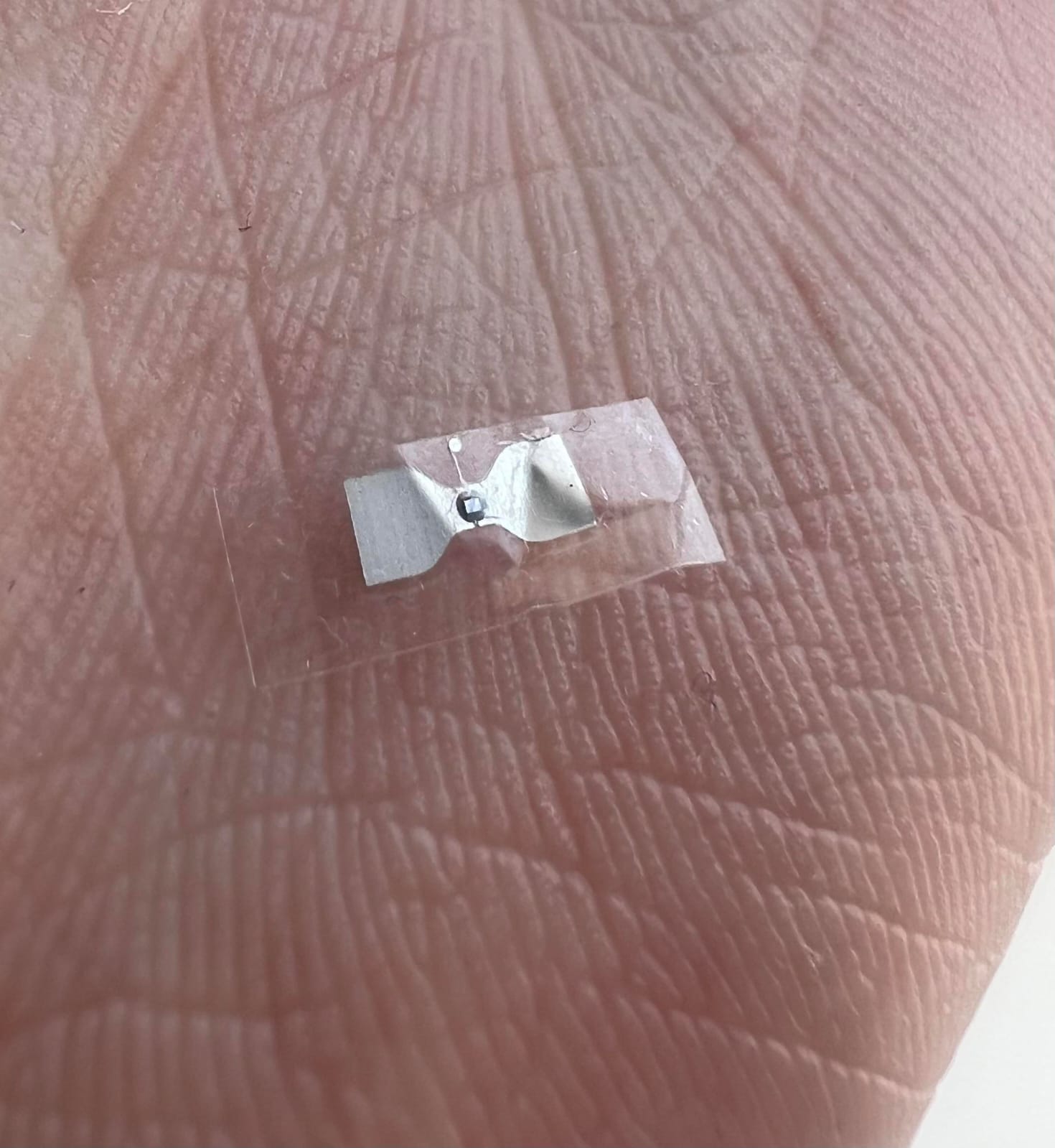
A viral post has millions of people looking at the back of their own necks. A user shared close-up photos of a small rectangular object with metallic components on clear adhesive backing. They found it stuck to the back of their neck in the shower. They had no idea where it came from or how long it had been there.
The internet reacted with panic, humor, and wild speculation. Aliens. Spying partners. Government tracking. Cyborg upgrades. The theories were endless.
But the answer is much simpler and much less alarming.
Here is what the device actually is and whether you should be worried.
THE SHORT ANSWER
The device is almost certainly an anti-theft tag from retail clothing. These tags are known as EAS (Electronic Article Surveillance) tags or RFID tags. They are designed to be removed by store employees at checkout. Sometimes they are not removed properly. They can stick to skin, hair, or clothing and go unnoticed for hours or even days.
The adhesive backing is designed to stick to fabric. It can also stick to skin. The metallic components are the antenna and circuitry that trigger store alarms. The device is not a tracking chip. It is not an implant. It is not a spying device. It is a forgotten security tag from a piece of clothing.
The person likely tried on or purchased clothing with the tag still attached. The tag transferred to their skin. They never noticed until it came off in the shower.
WHAT IS AN EAS OR RFID TAG?
EAS stands for Electronic Article Surveillance. These are the hard plastic tags or thin adhesive strips attached to clothing, electronics, and other merchandise in retail stores.
How they work: A sensor at the store entrance emits a radio frequency. If an active tag passes through, an alarm sounds. The cashier deactivates or removes the tag at checkout.
Adhesive tags: Some retailers use thin, flexible tags with adhesive backing. They stick to fabric. They are not as obvious as hard plastic tags. They can be missed by cashiers and customers.
The metallic components: The metallic-looking parts are the antenna and circuit. They are not a tracking device. They have no GPS. They have no battery. They cannot transmit location data. They only react to the specific frequency used by the store’s alarm system.
The device in the viral photos matches the appearance of these adhesive EAS tags.
COULD IT BE SOMETHING ELSE?
The internet speculated wildly. Here are the other theories and why they are unlikely.
Tracking chip or implant: No. Tracking chips require power. They are not adhesive. They are not found stuck to skin randomly. They are surgically implanted or worn on a wristband.
Government surveillance device: No. Governments do not track citizens with adhesive tags that fall off in the shower. They use cell phones, internet traffic, and cameras.
Spying device from a partner: Extremely unlikely. A tiny adhesive tag has no microphone, camera, or GPS. It cannot transmit anything. It would be useless for spying.
Alien technology: Definitely not.
The EAS tag explanation is mundane. It is also correct.
WHY DID THIS GO VIRAL?
The post went viral because it tapped into deep anxieties.
Fear of surveillance. People are worried about being tracked. The idea of a mysterious device stuck to your body triggers that fear.
Fear of the unknown. A small object with metallic parts looks like technology. Technology we do not recognize feels threatening.
Confirmation bias. Once someone suggested it could be a tracking device, millions of people looked for evidence to support that theory. They ignored the simpler explanation.
Humor. The comments were funny. People enjoyed speculating about aliens and cyborgs. The humor made the post more shareable.
The author played along with the jokes. That made the post even more engaging.
SHOULD YOU BE WORRIED IF YOU FIND ONE?
No. You should laugh.
If you find a small adhesive tag stuck to your skin or clothing, it is almost certainly an anti-theft tag. Remove it. Throw it away. Move on with your life.
The only exception is if the device looks different. A device with a battery, a circuit board, or a brand name you recognize might be something else. But the device in the photos had none of those features.
The viral post is a perfect example of how the internet turns a mundane annoyance into a global mystery.
THE BOTTOM LINE
The mysterious device found stuck to a person’s neck is an anti theft tag from retail clothing.
What it is: An EAS or RFID security tag. It triggers store alarms. It has no tracking capability.
What it is not: A tracking chip, an implant, a spying device, or alien technology.
Why it was there: The person tried on or purchased clothing with the tag still attached. It transferred to their skin. They did not notice.
Should you be worried? No. Remove it. Throw it away.
Why did this go viral? Fear of surveillance, fear of the unknown, confirmation bias, and humor.
The internet loves a mystery. This one has a boring answer. The boring answer is also the true answer.
What do you think – did you guess it was an anti-theft tag or something more sinister? Drop your take below. 🏷️