
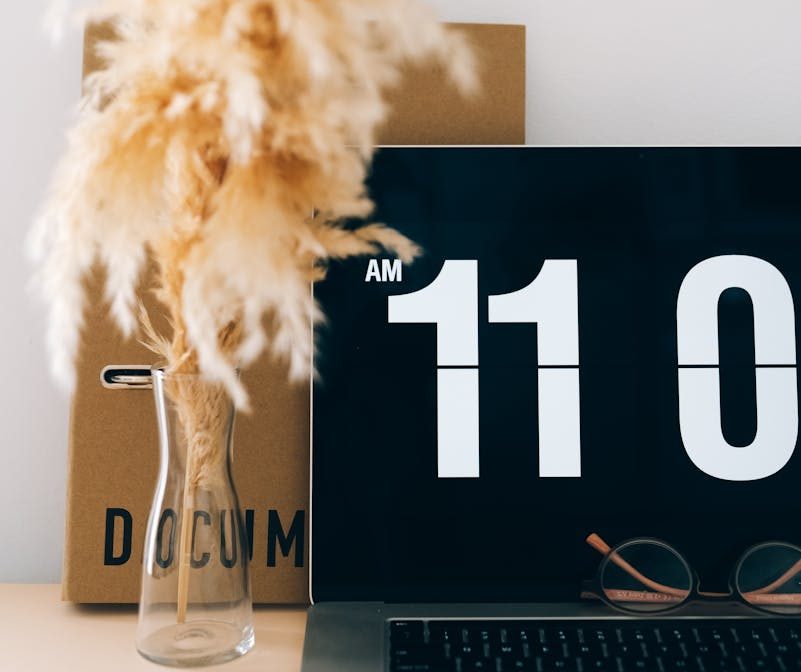
You get the email. HR wants to schedule your interview. They give you a few time slots to choose from. You see 11:00 AM available. It seems perfect. Not too early. Not too late. You pick it.
Big mistake.
According to hiring managers, recruiters, and behavioral economists, 11:00 AM is the worst possible time for an interview. You are setting yourself up for failure without even knowing it.
Here is why.
THE SHORT ANSWER
The 11:00 AM slot is dangerous because it falls into a “decision fatigue” and “hunger” window. Your interviewer has already been working for two to three hours. They have already conducted other interviews, answered emails, and attended meetings. Their cognitive energy is draining. Their blood sugar is dropping. Lunch is still an hour away.
By 11:00 AM, the interviewer is tired, hungry, and less patient. They are not at their peak decision-making capacity. They are more likely to judge you harshly, remember negative details more vividly, and feel less generous in their assessment.
Earlier slots (9:00 AM or 10:00 AM) catch the interviewer when they are fresh. Later slots (1:30 PM or 2:00 PM) catch them after lunch when energy has rebounded. 11:00 AM is the dead zone.
REASON 1: DECISION FATIGUE
Decision fatigue is a well-documented psychological phenomenon. The more decisions a person makes, the worse the quality of their subsequent decisions.
Your interviewer has been making decisions since they walked in the door. Which emails to answer first. How to handle a problem. Whether to approve a request. Which candidate to evaluate next.
By 11:00 AM, they have made dozens of decisions. Their mental reserves are depleted. They default to shortcuts, stereotypes, and snap judgments. They are less likely to give you the benefit of the doubt. They are more likely to remember a single mistake over your many strengths.
The research: Studies show that judges are harsher in the late morning than early morning. Parole boards grant freedom less often as the morning progresses. The same psychology applies to hiring managers.
REASON 2: HUNGER
By 11:00 AM, your interviewer is hungry. Lunch is not until noon or later. Blood sugar levels are dropping.
Hunger affects mood, patience, and cognitive function. Irritability increases. Focus decreases. Empathy drops.
A hungry interviewer is not evaluating you fairly. They are thinking about food. They are rushing to finish before lunch. They are less interested in your stories and more interested in ending the conversation.
The research: Studies have found that judges give harsher sentences before lunch than after. The same effect applies to interviews. Do not be the candidate sitting across from a hungry interviewer.
REASON 3: THE LUNCH RUSH
Interviews scheduled at 11:00 AM often get cut short. The interviewer has a 12:00 PM lunch meeting. They have a deadline. They need to wrap up by 11:45 AM to prepare.
You lose valuable time. Your answers get rushed. Your questions are dismissed. The interview ends early, and not because you were amazing.
Even if the interviewer does not have a lunch meeting, they are thinking about it. Their attention is divided. You are not getting their full focus.
REASON 4: THE “FALLING BEHIND” EFFECT
If the interviewer had a 10:00 AM interview that ran long, your 11:00 AM slot starts late. You wait. You get anxious. The interviewer is flustered and stressed. Not a good combination.
If the 10:00 AM interview went badly, the interviewer is in a negative mood. That mood carries over to you, even though you did nothing wrong.
Morning interviews cascade. The later you are in the morning sequence, the more you are affected by what happened before you.
REASON 5: YOU ARE ALSO TIRED
It is not just the interviewer. You are also at a disadvantage.
By 11:00 AM, you have been awake for hours. You have been nervous all morning. You have likely already waited in a lobby or on a video call. Your energy is not at its peak.
You performed better at 9:00 AM. You were fresher. Sharper. More articulate. By 11:00 AM, you are fatigued too. Not a good state for a high-stakes conversation.
WHAT TIME SHOULD YOU CHOOSE?
Here are the optimal interview times, ranked from best to worst.
Best: 9:00 AM or 9:30 AM.
The interviewer is fresh. They have not made many decisions yet. They are not hungry. They are not rushed. Their energy is high. Your energy is high. This is your strongest slot.
Second best: 10:00 AM.
Also good. The interviewer is still relatively fresh. Hunger has not set in. The lunch rush is not a concern. You are still early enough in the sequence to avoid cascade effects.
Third best: 1:30 PM or 2:00 PM.
The interviewer has eaten lunch. Blood sugar has rebounded. Energy is renewed. The post-lunch slump (1:00 PM) has passed. This is a solid second choice if you cannot do morning.
Acceptable: 3:00 PM.
Later than ideal. Decision fatigue has accumulated. The interviewer may be thinking about the end of the day. But still better than 11:00 AM.
Worst: 11:00 AM.
Avoid at all costs. Decision fatigue. Hunger. Lunch rush. Cascade effects. Your own fatigue. Everything is working against you.
Also avoid: 8:00 AM.
Too early. The interviewer may not be fully awake or settled. Commute stress may still be present. Coffee has not fully kicked in. Not as bad as 11:00 AM, but not good.
Also avoid: 4:00 PM.
Too late. The interviewer is tired. They are thinking about going home. They may rush. Avoid if possible.
WHAT IF 11:00 AM IS THE ONLY OPTION?
If HR gives you no choice, you can still succeed. You are just playing on hard mode.
Strategies for an 11:00 AM interview:
- Be extra energetic. The interviewer is tired. Your energy will stand out.
- Keep answers concise. Long rambling answers will annoy a hungry, fatigued interviewer.
- Be mindful of time. Ask early: “I know you have a busy day. I will be respectful of your time.” This shows awareness.
- Smile and be warm. Counteract the interviewer’s potential irritability with genuine positivity.
- Bring a water bottle. Hydration helps you stay sharp.
You can still win at 11:00 AM. You are just giving yourself a disadvantage for no reason.
THE BOTTOM LINE
If HR asks you to choose an interview time, do not pick 11:00 AM.
Why it is bad: Decision fatigue, hunger, lunch rush, cascade effects, and your own fatigue all peak at this hour.
Best times: 9:00 AM, 9:30 AM, 10:00 AM, or 1:30 PM to 2:00 PM.
The exception: If you are an early riser who peaks in the morning, avoid afternoon slots. If you are a night owl who struggles in the early morning, a later slot may actually be better for you. Know yourself.
For most people, 11:00 AM is a trap. Choose wisely.
What do you think – have you ever had a bad experience with a late morning interview? Drop your take below. ⏰