
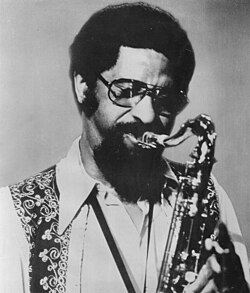
Walter Theodore “Sonny” Rollins was an American jazz tenor saxophonist born on September 7, 1930, in New York City. He was widely recognized as one of the most important and influential jazz musicians.
🎵 Early Life and Education
Rollins was the youngest of three siblings and grew up in central Harlem and on Sugar Hill. He received his first alto saxophone at the age of seven or eight and was nicknamed Sonny by his grandmother.
He attended Edward W. Stitt Junior High School and graduated from Benjamin Franklin High School in East Harlem. Rollins started as a pianist, then switched to alto saxophone after being inspired by Louis Jordan, and finally switched to tenor saxophone in 1946.
🎶 Career Beginnings and Breakthrough
After graduating from high school in 1948, Rollins began performing professionally and made his first recordings in early 1949 as a sideman. In early 1950, he was arrested for armed robbery and spent ten months in Rikers Island jail.
A breakthrough arrived in 1954 when Rollins recorded his famous compositions “Oleo”, “Airegin”, and “Doxy” with a quintet led by Miles Davis. In 1955, he entered the Federal Medical Center, Lexington, and volunteered for then-experimental methadone therapy to break his heroin habit.
📀 Major Recordings and Innovations
His widely acclaimed album Saxophone Colossus was recorded on June 22, 1956, and included his best-known composition “St. Thomas”. The album was selected for preservation by the National Recording Registry of the Library of Congress in 2016.
In 1957, Rollins pioneered the use of bass and drums, without piano, as accompaniment for his saxophone solos. Two early tenor/bass/drums trio recordings are Way Out West and A Night at the Village Vanguard, both recorded in 1957.
🎤 Later Career and Legacy
Rollins took a three-year break from recording starting in 1958 and practiced on the Williamsburg Bridge almost every day from the summer of 1959 through the end of 1961. He ended his sabbatical in November 1961 and named his 1962 “comeback” album The Bridge.
Rollins recorded more than sixty albums as a leader in a seven-decade career. He was awarded a lifetime Grammy Award and was honored with the Kennedy Center Honors in 2011.
| Year | Event | Album/Work | Significance |
|---|---|---|---|
| 1956 | Recorded Saxophone Colossus | Saxophone Colossus | Selected for National Recording Registry in 2016 |
| 1957 | Pioneered pianoless trio | Way Out West, A Night at the Village Vanguard | Used bass and drums without piano |
| 1959-1961 | Musical sabbatical | Practiced on Williamsburg Bridge | Famous break from recording |
| 1962 | Released comeback album | The Bridge | Inducted into Grammy Hall of Fame in 2015 |