
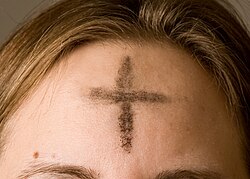
Ash Wednesday is a holy day of prayer and fasting in many Western Christian denominations. It marks the first day of Lent, the period of seven weeks before Easter.
🙏 Observance and Denominations
Ash Wednesday is observed by Christians of the Catholic, Lutheran, Moravian, Anglican, and United Protestant denominations. It is also observed by some churches in the Reformed, Baptist, Methodist, and Nazarene traditions.
🕯️ Practices and Rituals
Ash Wednesday is traditionally observed with fasting and abstinence from meat. Many Christians attend church services where they receive ashes on their foreheads or heads as a sign of repentance.
✝️ Imposition of Ashes
The ashes are prepared by burning palm leaves from the previous year’s Palm Sunday. The words said during the imposition are “Repent, and believe in the Gospel” or “Remember that you are dust, and to dust you shall return.”
⛪ Denominational Specifics
The Eastern Orthodox Church generally does not observe Ash Wednesday, beginning Great Lent on Clean Monday instead. Some Reformed churches historically did not observe it but many now do, such as the Presbyterian Church (USA).
🍽️ Fasting Rules
Among Catholics, Ash Wednesday rules include fasting and abstinence from meat. Fasting means one full meal and two smaller meals for those aged 18-59. Lutherans and Anglicans also have traditions of fasting and abstinence on this day.
📅 Timing and Duration
Ash Wednesday is always 46 days before Easter. Lent is 40 days long, not including Sundays, making the season 46 days overall from Ash Wednesday until Holy Saturday or Maundy Thursday.
| Denomination | Observes Ash Wednesday | Key Practice | Fasting Common |
|---|---|---|---|
| Catholic | Yes | Ashes, Abstinence from meat | Yes |
| Lutheran | Yes | Ashes in cross shape on forehead | Yes |
| Anglican | Yes | Imposition of Ashes | Yes |
| Eastern Orthodox | Generally No | Begins Lent on Clean Monday | N/A |