
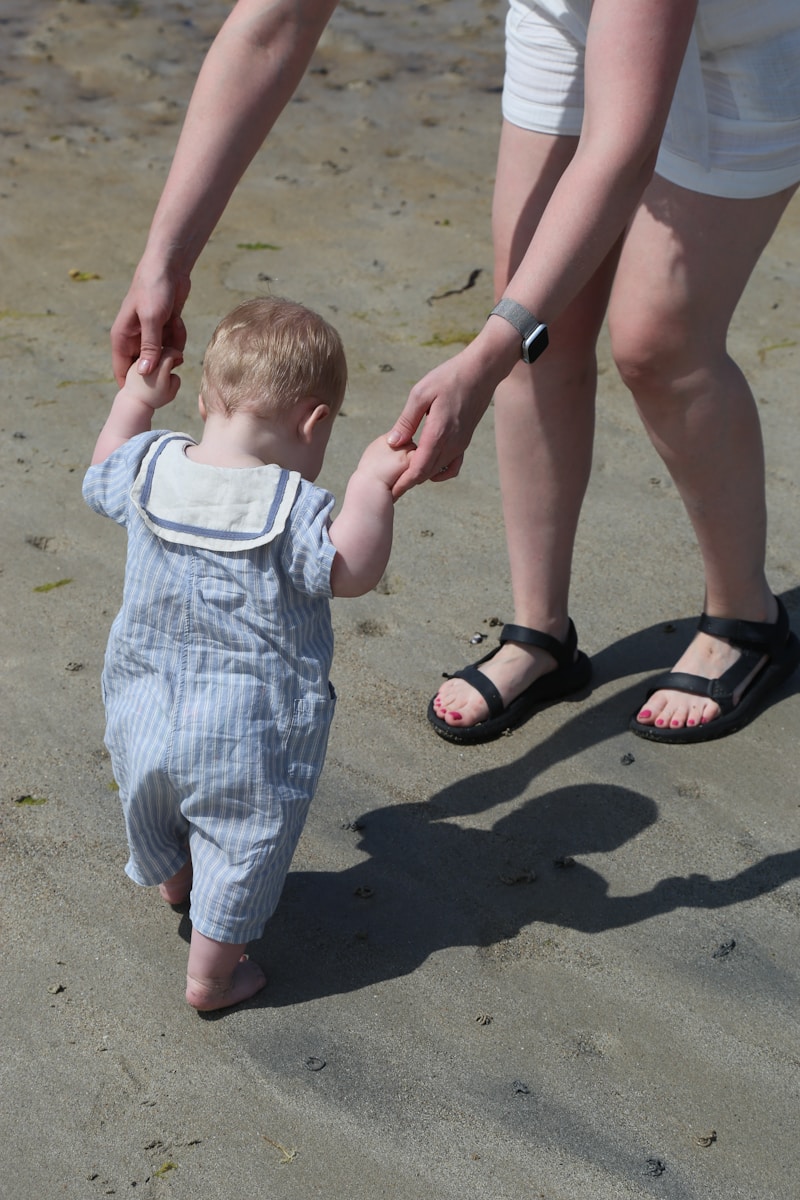
A baby takes their first step. Parents cheer. Cameras record. Grandparents cry.
Then the comparisons begin. “My niece walked at nine months.” “Your son is thirteen months and still crawling?” The anxiety creeps in. Is something wrong? Is something special?
The truth is more complicated and more fascinating than most people know. When a baby starts walking reveals surprising things about their brain, their body, and their future. Some findings are reassuring. Others are shocking.
Here are ten surprising and shocking facts about what early or late walking really indicates.
FACT ONE: EARLY WALKING DOES NOT MEAN EARLIER TALKING
Parents assume that an early walker is advanced in every way. They are wrong.
Research consistently shows that walking and talking develop independently. A baby who walks at nine months may talk later than a baby who walks at fifteen months. The brain prioritizes different skills at different times. Motor development and language development compete for neural resources.
A late walker is not a late learner. They may be using their brain power for words instead.
FACT TWO: LATE WALKING IS RARELY A SIGN OF A REAL PROBLEM
The range of normal is enormous. Most babies walk between nine and eighteen months. Yes, eighteen months. That is a nine month window.
Babies who walk at eighteen months are still within the normal range. Pediatricians only start worrying after eighteen months with no steps. Even then, most late walkers catch up completely.
The shocking truth is that parents panic over nothing. Late walking is almost never a sign of a permanent issue.
FACT THREE: EARLY WALKERS ARE NOT SMARTER AS ADULTS
There is zero correlation between walking age and adult intelligence.
A baby who walks at eight months and a baby who walks at fifteen months have the same range of IQ scores as adults. Early walking predicts nothing about academic achievement, career success, or problem-solving ability.
Parents who brag about their early walker are bragging about something that does not matter.
FACT FOUR: LATE WALKERS OFTEN HAVE BETTER BALANCE AS TODDLERS
Babies who walk later often spend more time crawling, cruising, and pulling up. They build more strength and coordination before taking their first steps.
Early walkers sometimes skip important developmental stages. They stand up and go before their muscles and vestibular system are fully ready. They fall more. They trip more. They crash into furniture.
Late walkers tend to be more stable once they finally start.
FACT FIVE: WALKING AGE IS HEAVILY INFLUENCED BY GENETICS
Parents who walked late are likely to have children who walk late. Grandparents matter too.
A study of twins found that walking age is about fifty percent heritable. The other half is environment. If your first child walked early, your second child will not necessarily walk early. But if you walked late as a baby, do not be surprised when your child does the same.
Genetics explain many “delays” that are not delays at all.
FACT SIX: TEMPERAMENT PREDICTS WALKING AGE MORE THAN PHYSICAL ABILITY
Cautious babies walk later. Reckless babies walk earlier.
This is the finding that shocks most parents. Walking is not just about strength and coordination. It is about risk tolerance.
A cautious baby who hates falling will stay close to the floor. They will cruise for months before letting go. A reckless baby who does not mind falling will launch themselves across the room at nine months.
The early walker is not more advanced. They are more impulsive.
FACT SEVEN: BODY TYPE AFFECTS WALKING AGE
Babies with larger heads walk later. The physics is simple. A heavy head shifts the center of gravity. Balancing is harder.
Babies with longer torsos relative to their legs also walk later. Short-legged, stocky babies have a mechanical advantage. Long-legged, skinny babies take longer to stabilize.
Babies who are born early often walk later when adjusted for gestational age. Parents forget to adjust. They worry for no reason.
FACT EIGHT: OPPORTUNITY MATTERS MORE THAN ABILITY
Babies who are carried constantly walk later. Babies who are left on the floor to explore walk earlier.
The reason is not about strength. It is about practice. Babies need thousands of hours of floor time to develop the muscles and coordination for walking. Babies who are held, worn, or confined to seats and swings get less practice.
Parents who want an earlier walker should put the baby down. The shocking truth is that many late walkers are late because they never had the chance to practice.
FACT NINE: WALKING AGE DOES NOT PREDICT ATHLETIC ABILITY
Parents of early walkers dream of future Olympians. They should stop.
There is no correlation between walking age and athletic performance in childhood or adulthood. Coordination, speed, and agility develop independently. Many professional athletes walked late. Many early walkers are terrible at sports.
Walking is a milestone. It is not a prophecy.
FACT TEN: THE PRESSURE TO WALK EARLY IS CULTURAL, NOT MEDICAL
In some cultures, early walking is celebrated and encouraged. In others, late walking is normal and ignored.
The World Health Organization studied healthy children across multiple countries. The normal range for walking was consistent. But parental anxiety varied dramatically.
American parents panic if their child is not walking by twelve months. Dutch parents do not worry until eighteen months. The babies are the same. The culture is different.
The shocking truth is that most parental anxiety about walking age is manufactured. It is not based on medical reality.
WHEN SHOULD YOU ACTUALLY WORRY?
Pediatricians look for red flags, not calendar dates.
Worry if: Your baby cannot bear weight on their legs by twelve months. They cannot pull to stand by fifteen months. They are not walking at all by eighteen months. They walk only on their toes after age two. They lose walking ability after having it.
Do not worry if: Your baby walked at ten months or seventeen months. They are cruising happily but will not let go. They are cautious and careful. They are meeting other milestones like pointing, clapping, and babbling.
Late walking alone is rarely a problem. Late walking with other delays is worth investigating.
THE BOTTOM LINE
Walking earlier or later reveals surprisingly little about a baby’s future.
What early walking indicates: Impulsivity, opportunity, genetics, and a lighter head. Not intelligence. Not athleticism. Not future success.
What late walking indicates: Caution, genetics, a larger head, or less floor time. Not a developmental problem. Not a learning disability. Not a cause for panic.
The shocking truth: Most parents worry about nothing. The range of normal is huge. Walking age predicts almost nothing about who a child will become.
The reassuring truth: By age five, no one can tell which children walked early and which walked late. The milestone disappears into the noise of development.
Put the baby down. Stop comparing. Enjoy the crawling, the cruising, and the first wobbly steps. Whenever they come.
What do you think – does knowing these facts make you less anxious about walking milestones? Drop your take below. 👶