
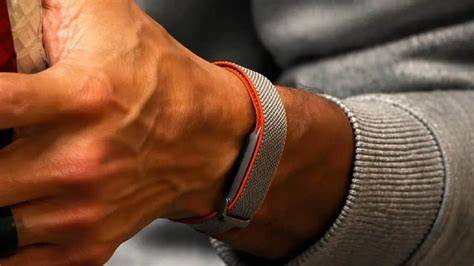
Google has a new gadget. It is called the Fitbit Air. It is a fitness tracker with no screen. It costs under one hundred dollars. It only needs to be charged once a week. And it comes in several colors.
The launch happened on May seventh, twenty twenty-six. NBA star Stephen Curry has been wearing it for weeks. Pre-orders are already open. The device ships on May twenty-sixth.
But what exactly is the Fitbit Air? And is it actually worth your money?
Here is everything you need to know.
THE SHORT ANSWER
The Fitbit Air is Google’s answer to screenless fitness trackers like the Whoop band. It tracks your workouts, heart rate, sleep stages, and even alerts you to irregular heart rhythms. It is lightweight at only twelve grams with the band. It is water resistant up to fifty meters. The battery lasts up to seven days.
For one hundred dollars, it is significantly cheaper than competitors. The Whoop four point zero requires a monthly subscription that costs over two hundred dollars per year. The Fitbit Air has no subscription for basic features, though advanced analytics require Google’s premium service.
Is it worth it? Yes, for most casual and dedicated fitness users. The price is low. The features are solid. The battery life is excellent. The lack of a screen is not a drawback for people who already carry a phone. For hardcore athletes who need detailed recovery metrics, a more expensive device may still be better. But for everyone else, the Fitbit Air is a very good deal.
WHAT IS THE FITBIT AIR?
The Fitbit Air is a screenless fitness tracker. It looks like a slim band or bracelet. There is no display. You do not tap or swipe. All data is viewed on your phone through the Fitbit app.
The design: Lightweight at twelve grams. Comfortable for all-day and all-night wear. Available in multiple colorways. Classic bands start at one hundred dollars. A Stephen Curry special edition with a performance loop band costs one hundred thirty dollars.
The battery: Lasts up to seven days on a full charge. A full recharge takes about ninety minutes. A five-minute charge gives you an extra day of battery life.
The durability: Water resistant up to fifty meters. Safe for swimming and showering.
WHAT DOES IT TRACK?
The Fitbit Air tracks everything you would expect from a modern fitness tracker.
Health monitoring:
- Twenty-four seven heart rate monitoring
- Heart rate rhythm tracking with Afib (atrial fibrillation) alerts
- SpO2 (blood oxygen) monitoring
- Heart rate variability tracking
Sleep tracking:
- Sleep stages (light, deep, REM)
- Sleep duration and consistency
- Advanced sleep insights (with premium subscription)
Workout tracking:
- Automatic workout detection
- Tracks runs, walks, swims, and other activities
- Learns your routines over time for better accuracy
The key feature is that you do not have to tell the Fitbit Air that you are working out. It detects movement and heart rate changes and automatically starts tracking. Over time, it adapts to your specific patterns.
HOW DOES IT COMPARE TO COMPETITORS?
The screenless fitness tracker market has a few main players.
Whoop four point zero: Costs about two hundred fifty dollars for the device plus a monthly subscription of roughly twenty dollars per month. That is over two hundred forty dollars per year. Whoop focuses heavily on recovery, strain, and sleep. It is designed for serious athletes.
Oura Ring: Costs three hundred to four hundred dollars for the ring. Requires a monthly subscription of roughly six dollars per month. Tracks similar metrics. More discreet but also more expensive.
Fitbit Air: Costs one hundred dollars for the device. No subscription is required for basic tracking. Google Health Premium, which adds deeper insights and coaching, costs extra but is optional.
The Fitbit Air advantages are a much cheaper upfront cost, no mandatory subscription, good battery life, and automatic workout detection.
The Fitbit Air disadvantages are no screen (you cannot see your heart rate or workout time without checking your phone), no built-in GPS (it uses your phone’s GPS), and advanced analytics requiring a subscription.
IS THE LACK OF A SCREEN A PROBLEM?
This is the main question for most buyers.
The Fitbit Air has no screen. You cannot glance at your wrist to see your heart rate, the time, or your workout duration. Everything requires opening the Fitbit app on your phone.
For some people, this is a dealbreaker. They want data at a glance. They want to know how hard they are working without pulling out a phone.
For others, it is not a problem. They already carry a phone for music, maps, or GPS. Checking the phone for fitness data is not an extra burden. And the lack of a screen means the tracker is smaller, lighter, and has much better battery life.
Who should buy: People who prioritize battery life and low cost over on-wrist data. People who already use their phone during workouts. People who dislike bulky smartwatches.
Who should not buy: People who want to see their heart rate or workout time without touching their phone. People who need GPS tracking without carrying a phone. People who want a smartwatch with notifications.
IS THE STEPHEN CURRY EDITION WORTH THE EXTRA MONEY?
The special edition costs one hundred thirty dollars instead of one hundred dollars. It comes with a performance loop band that has a water-resistant coating. The interior has raised bands designed for increased airflow during intense activity.
For most people, the standard classic band is fine. The special edition is for fans of Stephen Curry or people who do very intense, sweaty workouts where the extra airflow makes a difference. For everyone else, save the thirty dollars.
THE BOTTOM LINE
The Fitbit Air is a solid entry into the screenless fitness tracker market.
What it is: A lightweight, waterproof, week-long battery fitness tracker with no screen.
What it tracks: Heart rate, sleep, workouts, SpO2, heart rate variability, and irregular heart rhythms.
What it costs: One hundred dollars for the standard version. One hundred thirty dollars for the Stephen Curry edition.
Who it is for: Casual and dedicated fitness users who carry a phone during workouts and want good features without a high price.
Who it is not for: Athletes who need detailed recovery metrics, people who want on-wrist data, or anyone who dislikes checking their phone.
Is it worth it? Yes, at one hundred dollars. The price is low. The features are solid. The battery life is excellent. For most people, it does everything a fitness tracker needs to do.
Google has delivered a competitive product. The Fitbit Air is not revolutionary. It is smart, simple, and affordable. That is exactly what most people need.
What do you think – would you buy a screenless fitness tracker? Drop your take below. ⌚