
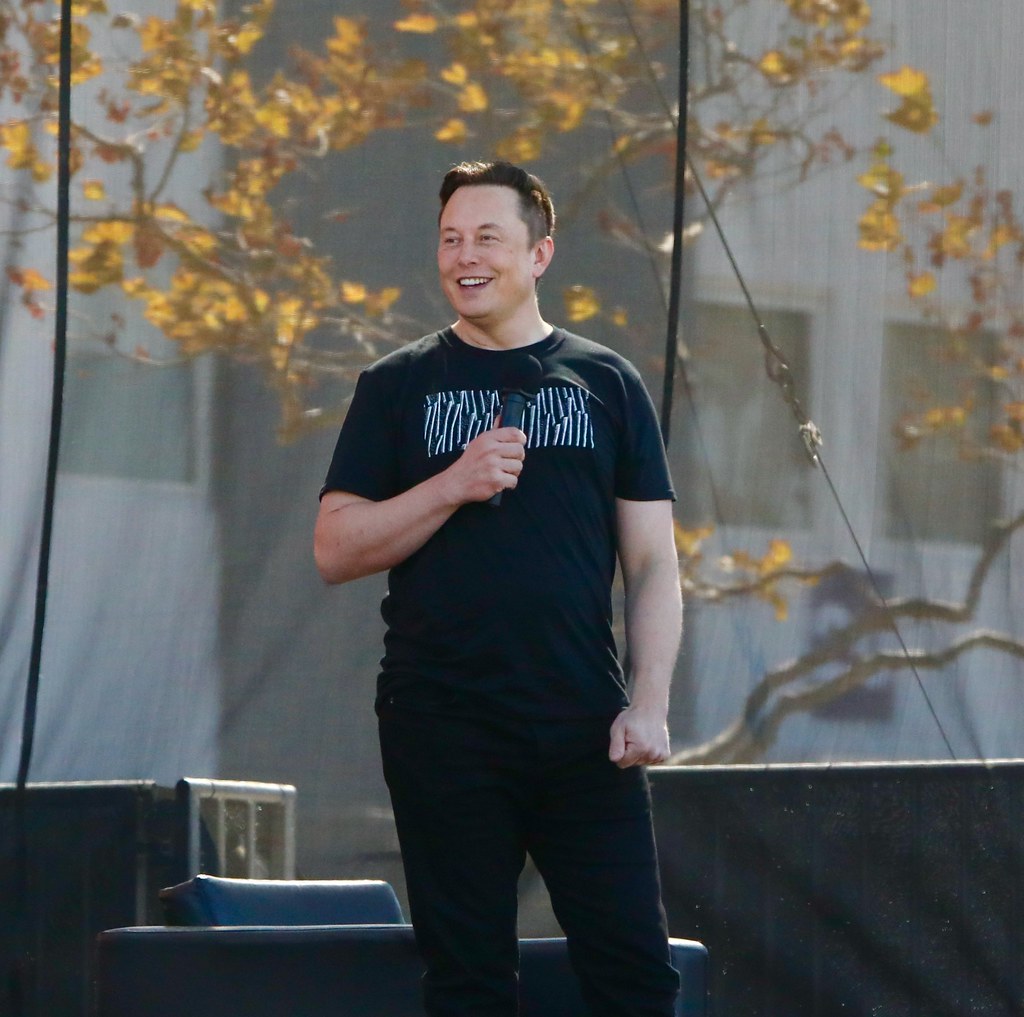
A list is circulating online. It reads like a parody. Elon Musk’s resume spans over two decades and includes some of the most transformative companies of the modern era. PayPal. SpaceX. Tesla. Neuralink. The Boring Company. xAI. And of course, X (formerly Twitter).
The timeline is staggering. CEO of X since 2022. CEO of Tesla since 2008. Founder and CEO of SpaceX since 2002. Co-founder of PayPal in 1999. CEO of xAI since 2023. Founder of Neuralink since 2016. Founder of The Boring Company since 2017. And earlier stints at Zip2 (acquired by Compaq) and OpenAI’s board.
The question is not just whether these are real. The question is: did Elon Musk really invent all of these things? And how does one person possibly do all of this?
Here is the truth behind the resume.
THE SHORT ANSWER
Yes, the resume is accurate. Elon Musk has held these roles. But “invented” is the wrong word. Musk did not single-handedly build PayPal, Tesla, or SpaceX. He was a co-founder or early investor in most cases. He recruited exceptional engineers. He provided vision, capital, and leadership. The actual invention was done by teams of thousands.
What makes Musk unique is not his technical output. It is his ability to identify critical problems (internet payments, electric cars, space launch, brain-computer interfaces, tunneling, AI) and assemble the talent and capital to solve them. He works extremely long hours (80-100 hour weeks). He is deeply involved in engineering decisions. And he leverages his success from one company to fund the next.
The resume is real. The myth of Musk as a solo inventor is exaggerated.
WHAT ELON MUSK ACTUALLY DID AT EACH COMPANY
The list is impressive. Here is the breakdown of his actual role.
X (formerly Twitter) – CEO (2022 to Present)
- What he did: Acquired Twitter for $44 billion. Rebranded it to X. Fired most of the staff. Overhauled the platform’s features, content moderation, and monetization.
- Did he invent it? No. He bought it. He did not create the technology.
xAI – CEO & Product Architect (2023 to Present)
- What he did: Founded a new AI company to compete with OpenAI, Google, and Anthropic. Developed Grok, an AI chatbot.
- Did he invent it? He founded the company. The AI was built by engineers he hired.
Tesla – CEO (2008 to Present)
- What he did: Joined as chairman after leading the Series A investment round. Became CEO in 2008. Drove the development of the Roadster, Model S, Model 3, Cybertruck, and Tesla’s autonomous driving technology.
- Did he invent it? No. He was not a founder. Martin Eberhard and Marc Tarpenning founded Tesla. Musk was an early investor and took over leadership.
SpaceX – Founder, CEO & Chief Engineer (2002 to Present)
- What he did: Founded the company with the goal of reducing space launch costs. Oversaw the development of the Falcon 1, Falcon 9, Dragon, Starship, and Starlink.
- Did he invent it? He founded it and is deeply involved in engineering decisions. He is not the sole inventor. The rockets were designed by thousands of engineers under his direction.
PayPal (formerly X.com) – Co-founder (1999-2002)
- What he did: Founded X.com, an online bank. Merged with Confinity (which had a money transfer service called PayPal). The combined company became PayPal.
- Did he invent it? Co-founder. The core PayPal technology came from Confinity, founded by Max Levchin and Peter Thiel.
Neuralink – Founder (2016 to Present)
- What he did: Founded the company to develop brain-computer interfaces.
- Did he invent it? He provided the vision and funding. The technology is developed by neuroengineers.
The Boring Company – Co-founder, CEO (2017 to Present)
- What he did: Founded the company to build underground tunnels for transportation.
- Did he invent it? He conceived it as a solution to traffic. Engineers built it.
Zip2 – Co-founder, CEO (1995-1999)
- What he did: Co-founded the company, which provided online city guides and maps to newspapers.
- Did he invent it? Yes, with his brother Kimbal Musk. He wrote code.
OpenAI – Co-founder (2015-2018, left board)
- What he did: Co-founded the nonprofit AI research company. Left the board in 2018.
- Did he invent it? Co-founder with Sam Altman and others. He did not build the technology himself.
DID HE “INVENT” ALL OF THESE?
No. The word “invent” is the wrong frame.
Invention vs. founding: Musk invented some things early in his career (he wrote code for Zip2). At SpaceX and Tesla, he leads engineering direction but does not personally design rockets or cars. At Neuralink, xAI, and The Boring Company, he provides vision and funding. At X, he bought an existing company.
The better word: Musk is a founder, CEO, and product architect. He identifies opportunities. He raises capital. He recruits geniuses. He sets impossible deadlines. He pushes teams to achieve what they thought was impossible. He does not sit alone in a room inventing things.
The Steve Jobs comparison: Like Steve Jobs, Musk is not a technical inventor. He is a visionary and a product integrator. He sees how technologies can combine to change industries. He demands excellence. He sells the dream.
WHY DOES ELON MUSK HAVE SO MANY COMPANIES?
The short answer: he cannot stop. Literally.
High tolerance for chaos: Musk thrives on stress. He sleeps on factory floors. He sends angry emails at 3 a.m. He juggles multiple crises simultaneously. Most people burn out. Musk seems energized.
100-hour work weeks: Musk has famously said he works 80-100 hours per week. That is the equivalent of two full-time jobs. He does not take vacations. He does not have hobbies (except posting on X). His entire life is work.
Delegation to trusted lieutenants: Musk does not personally run every detail of every company. He has highly capable CEOs or presidents at each company (though he often overrides them). He focuses on the most critical problems at the most critical companies at any given time.
Leveraging success: Tesla’s stock price made Musk the richest person in the world. That wealth funds his other ventures. SpaceX’s success funds Starlink and Starship. PayPal’s exit funded early Tesla and SpaceX.
Obsessive focus on the future: Musk genuinely believes that humanity must become multiplanetary, transition to sustainable energy, merge with AI, and solve traffic. He does not see these as separate businesses. He sees them as interconnected missions. Companies are vehicles for the missions.
WHAT ARE HIS ACTUAL INVENTION CREDITS?
Musk does hold some patents. But they are not what made him famous.
Patents: Musk has over 50 patents. Most are related to electric vehicle technology, battery systems, and rocket design. However, he is rarely the sole inventor. His name appears alongside dozens of engineers.
Notable inventions: Early Zip2 software (he wrote code). The concept of reusable rockets (though not the engineering). The idea of a brain-computer interface (though not the implementation). The “alien dreadnought” automated factory concept (partially realized).
The real invention: Musk invented a new model of entrepreneurial capitalism. He proved that a private citizen could build a rocket company that rivals national space programs. He proved that electric cars could be desirable and profitable. He proved that a social media platform could be bought and radically transformed by one person.
CRITICISM OF THE RESUME
Not everyone is impressed. Critics point out several issues.
“Founder” inflation: Musk often claims founder status at companies he did not found (Tesla). He did not found PayPal alone. He bought Twitter; he did not build it. The resume stretches the meaning of “founder.”
Toxic work culture: Musks’ productivity is enabled by forcing employees to match his insane hours. Former employees describe a culture of fear, burnout, and unrealistic expectations. His success is built on their sacrifice.
Acquisitions are not inventions: Buying Twitter for $44 billion and then nearly running it into the ground is not an achievement of invention. It is an achievement of wealth.
Distraction: Critics argue that Musk would be more effective if he focused on one or two companies. His scattered attention leads to broken promises (Full Self-Driving, the Cybertruck timeline, Hyperloop).
The X problem: Musk’s ownership of X has been a financial disaster. Ad revenue collapsed. The platform’s value dropped by over 70%. His most recent “accomplishment” is widely seen as a failure.
THE BOTTOM LINE
Elon Musk’s resume is real. The timeline is accurate. He holds those roles.
Did he invent all these things? No. He founded many of them. He led them. He did not personally invent every technology.
Why does he have so many companies? He has an obsessive drive, a high tolerance for chaos, immense wealth to fund new ventures, and a habit of hiring brilliant people and pushing them to extremes.
Is his productivity admirable? Yes, in terms of output. No, in terms of sustainability and human cost.
Should you try to copy him? Almost certainly not. His schedule is unhealthy. His management style is abusive by normal standards. He is an outlier, not a role model.
Elon Musk is a unique figure. The resume proves his ambition. It does not prove he is a superhuman inventor. He is a man who works obsessively, takes enormous risks, and has been rewarded with extraordinary success.
And sometimes, that success creates its own mythology.
What do you think – is Elon Musk a genius inventor or a brilliant self-promoter? Drop your take below. 🧠